Spacebank, an AI and Digital Transformation (DX) solutions company led by CEO Woney Lee, has unveiled its cloud-based Software Defined Robot (SDR) platform, presenting its vision for the future of a software-driven robotics ecosystem.
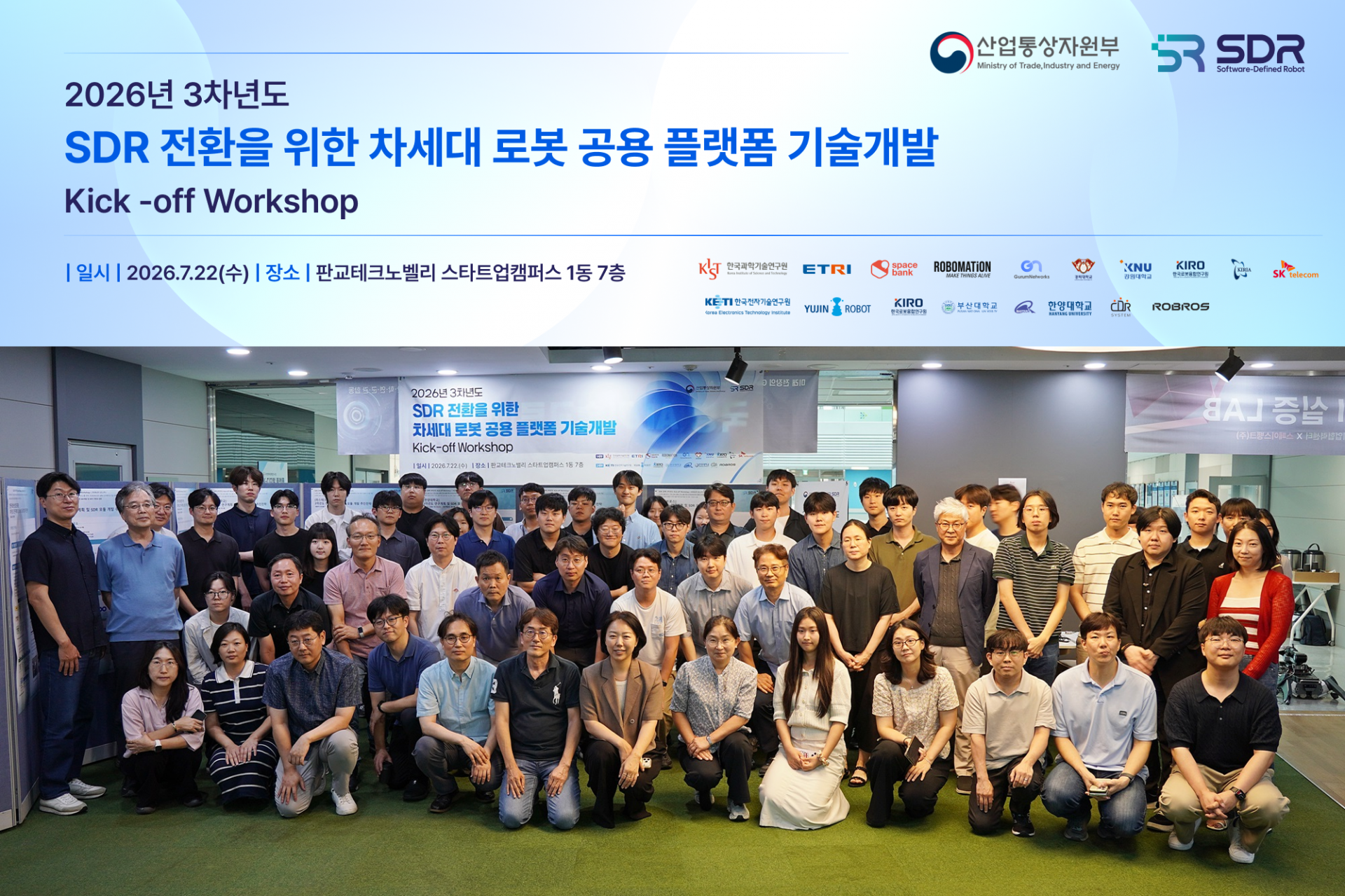
Spacebank participated in the third-year kickoff workshop for the national R&D project, “Development of a Framework, Common Interfaces, and Service Operation System for Cloud-Based SDR Common Services,” held on August 22 at the Gyeonggi Startup Campus in Pangyo, Korea, where the company demonstrated key technologies for its next-generation SDR platform.
Hosted by the Korea Institute of Science and Technology (KIST), the workshop brought together participating organizations to share third-year R&D plans and discuss the development of SDR modules and collaborative research initiatives.
Cloud-Based SDR and OTA Technology Enable Robots to Continuously Evolve
At the workshop, Spacebank demonstrated its platform with a focus on a cloud-based SDR framework and Over-the-Air (OTA) module deployment technology.
The company showcased an architecture that enables robots to wirelessly download and immediately deploy software functions required for different business models directly from the cloud.
Through its OTA technology and service script system, Spacebank demonstrated how robot capabilities can be continuously expanded and updated through software—without relying solely on hardware modifications.
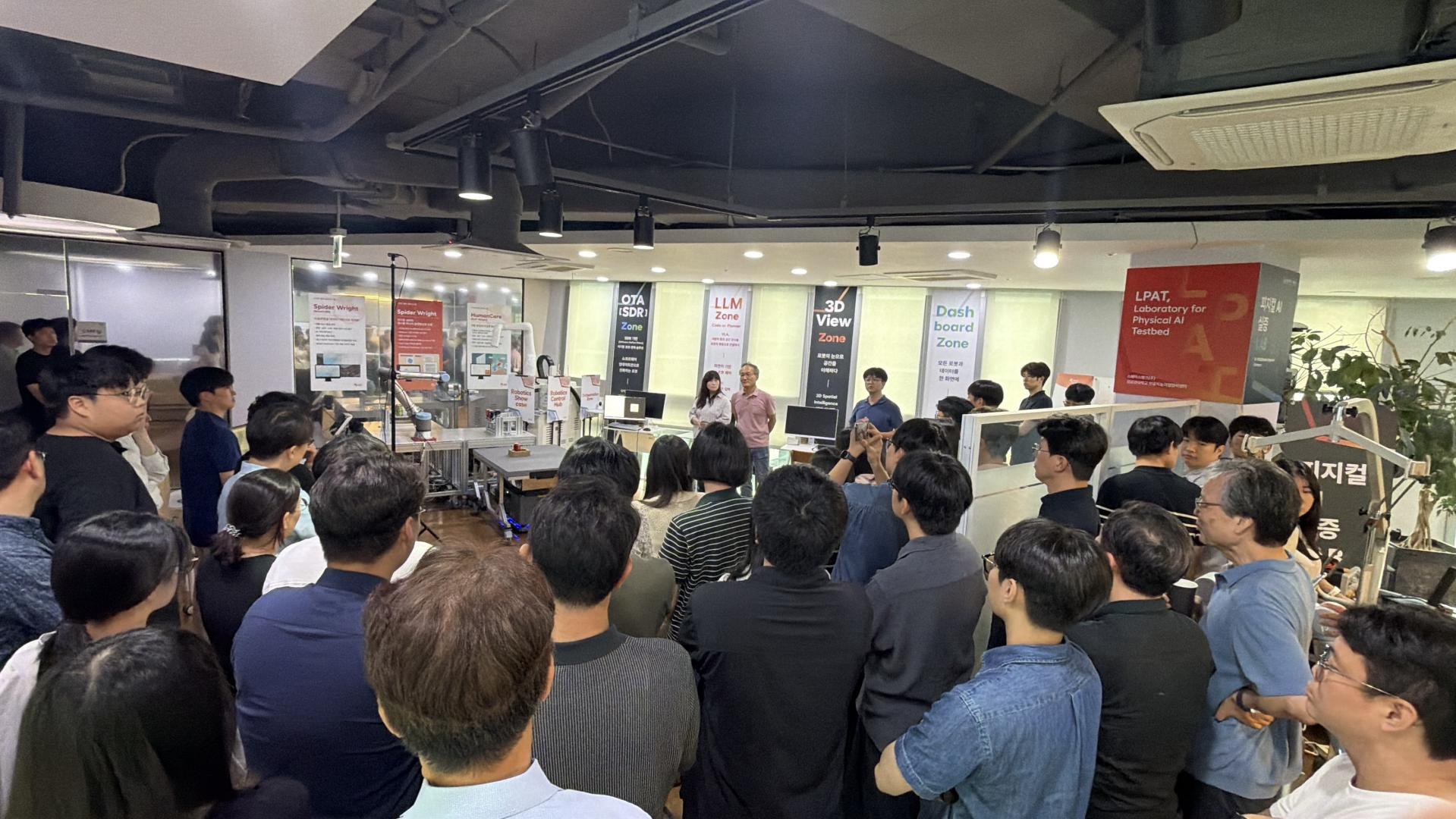
▲ The 2026 third-year SDR project kickoff workshop hosted by KIST. (Photo: Spacebank)
Spacebank also introduced capabilities for registering, creating, deploying, and managing software modules across heterogeneous robots, along with an integrated robot management platform that enables multiple robots to be operated simultaneously through a single interface.
This SDR-based operating environment moves beyond the conventional model in which separate management systems are required for robots from different manufacturers. Instead, various types of robots can be connected, managed, and operated through one integrated platform.
One of the highlights of the demonstration showed a robot downloading the required software modules through Spacebank's cloud-based SDR platform and then performing new functions based on its assigned task.
The demonstration highlighted the potential of SDR technology across a wide range of robotics applications—including logistics, food and beverage (F&B), security and surveillance, and humanoid robots—where capabilities can be continuously updated and expanded through OTA technology.
This represents an important shift away from the traditional hardware-centric approach to robotics toward an SDR paradigm in which new capabilities can be added and updated through software.
The concept is similar to the evolution of Software Defined Vehicles (SDVs). Just as modern vehicles can receive new capabilities, including autonomous driving functions such as FSD, through OTA software updates, robots are expected to increasingly download the software modules they need to perform new and diverse tasks.
This transition is expected to create a new robotics ecosystem in which robot capabilities can continuously evolve through software.
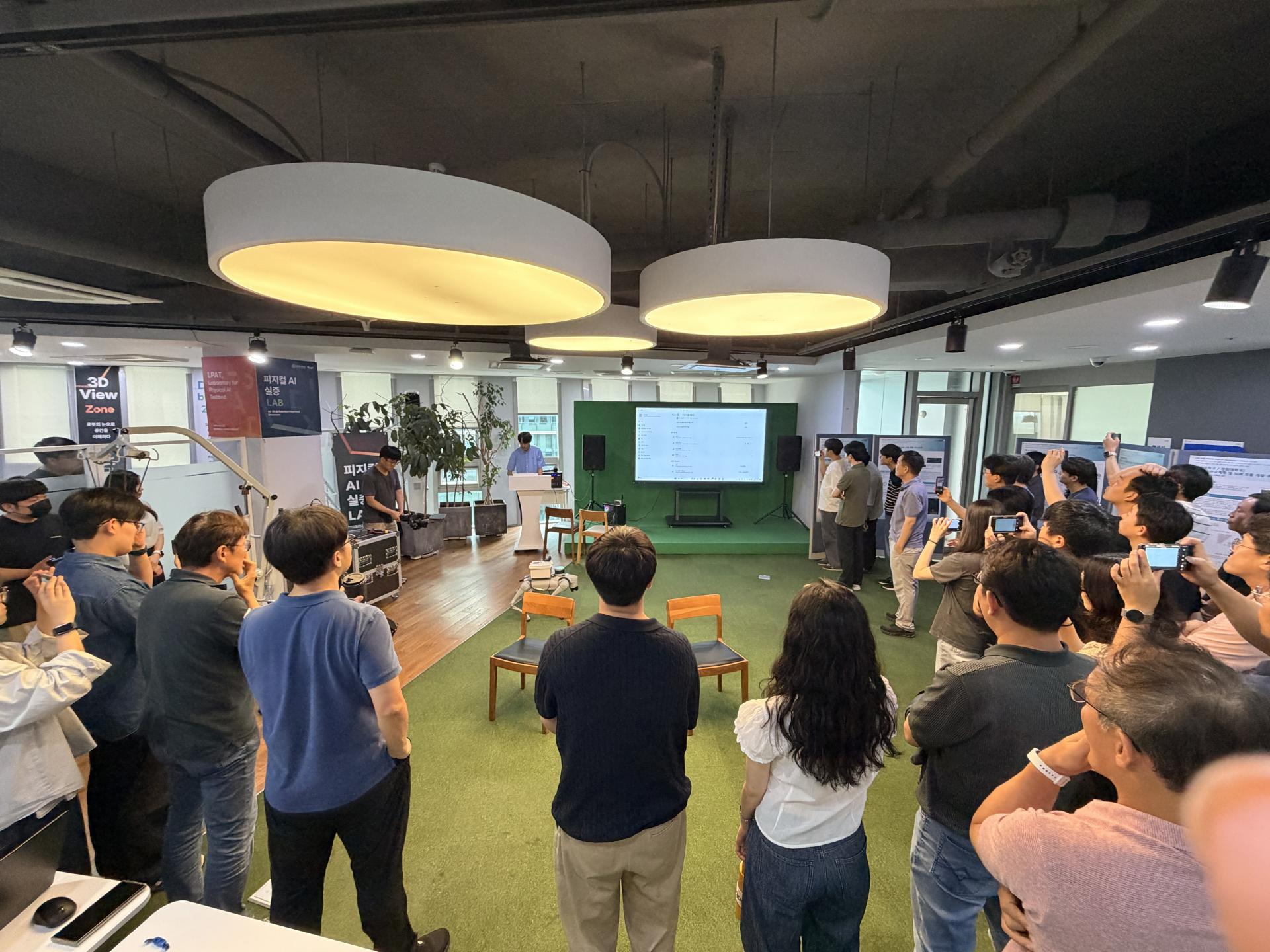
▲ Spacebank demonstrates the process of downloading robot modules and deploying services using OTA technology through its cloud-based Software Defined Robot (SDR) platform. (Photo: Spacebank)
The workshop brought together a broad group of industry, academic, and research organizations, including the Korea Institute of Science and Technology (KIST), Korea Electronics Technology Institute (KETI), Electronics and Telecommunications Research Institute (ETRI), Robomation, Goorum Networks, Yujin Robot, ROBROS, Rastech, CDR System, SK Telecom, Kyung Hee University, Kangwon National University, Hanyang University, Pusan National University, Korea Institute of Robotics & Technology Convergence, and Korea Institute for Robot Industry Advancement.
Participants shared their respective SDR technologies and business models and discussed collaboration plans for an integrated demonstration scheduled for later this year.
Through the national R&D project currently being carried out with KIST, Spacebank is developing technologies including a cloud-based SDR platform, robot OTA technology, service scenario management, service simulators, and an integrated robot management system.
The company plans to further develop these technologies into a software-driven robotics platform that can be applied across a wide range of industries, including Physical AI, humanoid robots, and autonomous mobile robots.
“The robotics industry is rapidly shifting beyond hardware competition toward competition centered on software platforms,” said Woney Lee, CEO of Spacebank. “Through our cloud-based SDR platform, Spacebank aims to build an open robotics ecosystem that can connect and continuously evolve diverse robots, regardless of manufacturer or robot type.”
Spacebank is further advancing its flagship RoboViewX platform based on its SDR technologies.
RoboViewX is being developed as a next-generation robot operations platform for deployment across diverse industrial environments, including Physical AI, humanoids, logistics and service robots, defense, and smart factories.
By combining SDR capabilities with integrated robot management, Spacebank aims to create an environment where heterogeneous robots can be connected and operated through a unified software platform while continuously gaining new capabilities through software updates.
The company also plans to actively participate in international SDR standardization initiatives and contribute to the expansion of the global robotics ecosystem.
Spacebank was recently selected for the Korean government's Innovation Premier 1000 program, adding another milestone to the company's recognition under government technology innovation initiatives.
Building on policy financing and public procurement opportunities, Spacebank plans to further expand its businesses across AI·DX, Physical AI, and SDR platforms, while strengthening the foundation for future growth in domestic and global markets.
Reporter: Jiho Choi
Source: The Robot Report Korea (iRobotNews)
https://www.irobotnews.com/news/articleView.html?idxno=47624


Spacebank, an AI and Digital Transformation (DX) solutions company led by CEO Woney Lee, has unveiled its cloud-based Software Defined Robot (SDR) platform, presenting its vision for the future of a software-driven robotics ecosystem.
Spacebank participated in the third-year kickoff workshop for the national R&D project, “Development of a Framework, Common Interfaces, and Service Operation System for Cloud-Based SDR Common Services,” held on August 22 at the Gyeonggi Startup Campus in Pangyo, Korea, where the company demonstrated key technologies for its next-generation SDR platform.
Hosted by the Korea Institute of Science and Technology (KIST), the workshop brought together participating organizations to share third-year R&D plans and discuss the development of SDR modules and collaborative research initiatives.
Cloud-Based SDR and OTA Technology Enable Robots to Continuously Evolve
At the workshop, Spacebank demonstrated its platform with a focus on a cloud-based SDR framework and Over-the-Air (OTA) module deployment technology.
The company showcased an architecture that enables robots to wirelessly download and immediately deploy software functions required for different business models directly from the cloud.
Through its OTA technology and service script system, Spacebank demonstrated how robot capabilities can be continuously expanded and updated through software—without relying solely on hardware modifications.
▲ The 2026 third-year SDR project kickoff workshop hosted by KIST. (Photo: Spacebank)
Spacebank also introduced capabilities for registering, creating, deploying, and managing software modules across heterogeneous robots, along with an integrated robot management platform that enables multiple robots to be operated simultaneously through a single interface.
This SDR-based operating environment moves beyond the conventional model in which separate management systems are required for robots from different manufacturers. Instead, various types of robots can be connected, managed, and operated through one integrated platform.
One of the highlights of the demonstration showed a robot downloading the required software modules through Spacebank's cloud-based SDR platform and then performing new functions based on its assigned task.
The demonstration highlighted the potential of SDR technology across a wide range of robotics applications—including logistics, food and beverage (F&B), security and surveillance, and humanoid robots—where capabilities can be continuously updated and expanded through OTA technology.
This represents an important shift away from the traditional hardware-centric approach to robotics toward an SDR paradigm in which new capabilities can be added and updated through software.
The concept is similar to the evolution of Software Defined Vehicles (SDVs). Just as modern vehicles can receive new capabilities, including autonomous driving functions such as FSD, through OTA software updates, robots are expected to increasingly download the software modules they need to perform new and diverse tasks.
This transition is expected to create a new robotics ecosystem in which robot capabilities can continuously evolve through software.
▲ Spacebank demonstrates the process of downloading robot modules and deploying services using OTA technology through its cloud-based Software Defined Robot (SDR) platform. (Photo: Spacebank)
The workshop brought together a broad group of industry, academic, and research organizations, including the Korea Institute of Science and Technology (KIST), Korea Electronics Technology Institute (KETI), Electronics and Telecommunications Research Institute (ETRI), Robomation, Goorum Networks, Yujin Robot, ROBROS, Rastech, CDR System, SK Telecom, Kyung Hee University, Kangwon National University, Hanyang University, Pusan National University, Korea Institute of Robotics & Technology Convergence, and Korea Institute for Robot Industry Advancement.
Participants shared their respective SDR technologies and business models and discussed collaboration plans for an integrated demonstration scheduled for later this year.
Through the national R&D project currently being carried out with KIST, Spacebank is developing technologies including a cloud-based SDR platform, robot OTA technology, service scenario management, service simulators, and an integrated robot management system.
The company plans to further develop these technologies into a software-driven robotics platform that can be applied across a wide range of industries, including Physical AI, humanoid robots, and autonomous mobile robots.
“The robotics industry is rapidly shifting beyond hardware competition toward competition centered on software platforms,” said Woney Lee, CEO of Spacebank. “Through our cloud-based SDR platform, Spacebank aims to build an open robotics ecosystem that can connect and continuously evolve diverse robots, regardless of manufacturer or robot type.”
Spacebank is further advancing its flagship RoboViewX platform based on its SDR technologies.
RoboViewX is being developed as a next-generation robot operations platform for deployment across diverse industrial environments, including Physical AI, humanoids, logistics and service robots, defense, and smart factories.
By combining SDR capabilities with integrated robot management, Spacebank aims to create an environment where heterogeneous robots can be connected and operated through a unified software platform while continuously gaining new capabilities through software updates.
The company also plans to actively participate in international SDR standardization initiatives and contribute to the expansion of the global robotics ecosystem.
Spacebank was recently selected for the Korean government's Innovation Premier 1000 program, adding another milestone to the company's recognition under government technology innovation initiatives.
Building on policy financing and public procurement opportunities, Spacebank plans to further expand its businesses across AI·DX, Physical AI, and SDR platforms, while strengthening the foundation for future growth in domestic and global markets.
Reporter: Jiho Choi
Source: The Robot Report Korea (iRobotNews)
https://www.irobotnews.com/news/articleView.html?idxno=47624